

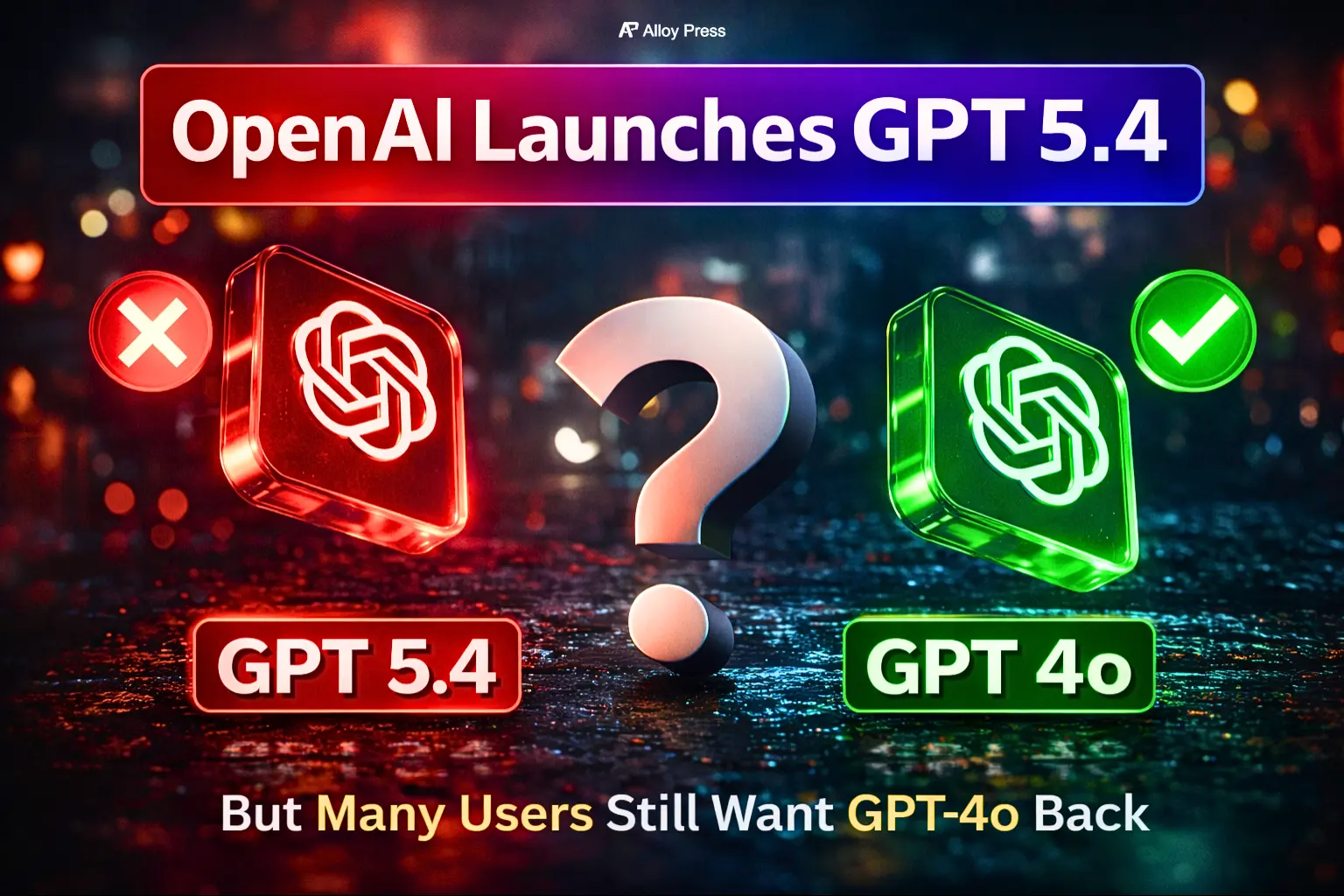
OpenAI has introduced its latest AI model, GPT-5.4, marking another step forward in the rapid evolution of artificial intelligence. The announcement came from OpenAI CEO Sam Altman, who said the model is rolling out through APIs, Codex and gradually inside ChatGPT.
According to OpenAI, GPT-5.4 is designed to perform better in tasks such as web research, coding and complex reasoning. One of its biggest upgrades is a context window of up to one million tokens, allowing the model to process extremely large documents or datasets in a single interaction. The model also introduces native computer-use capabilities, meaning it can interact with tools, navigate digital interfaces and handle multi-step workflows more effectively than earlier systems.
Benchmark results shared with the announcement suggest measurable improvements. GPT-5.4 reportedly performs strongly in several AI evaluation tests, including web navigation, scientific reasoning and software engineering benchmarks. In some cases it even edges ahead of competing models such as Claude Opus 4.6 and Gemini 3.1 Pro. The model also introduces mid-response steering, allowing users to adjust instructions while the AI is generating an answer instead of restarting the prompt.
Despite these technical improvements, the launch has also triggered a noticeable reaction from users online. On X, many people began sharing posts asking OpenAI to keep the older model GPT-4o available. Hashtags such as #Keep4o, #BringBack4o and #OpenAI4o started appearing in discussions shortly after the announcement.
For many users, the issue is not the arrival of new models but the removal or reduced availability of older ones. Some say GPT-4o felt faster, more conversational and better suited for everyday writing, brainstorming and general assistance. Developers and creators who built workflows around the older model also worry that switching models could change outputs and disrupt their systems.
The discussion highlights a broader tension in the AI industry. Companies continue to push more powerful models with better benchmark performance, but many users prefer stability and choice over constant upgrades. Some argue the ideal approach would be to keep models like GPT-4o available while offering GPT-5.4 as an optional upgrade rather than a replacement.
As OpenAI continues rolling out GPT-5.4, the response from the community shows that progress in AI is not only about building stronger models. For many users, the real value lies in having tools that remain reliable, consistent and available alongside new innovations.
Our AlloyPress team is excited to try using GPT-5.4. At the same time, we believe users should still have the option to switch to older models. This way, users can try the new model and those who prefer the older ones can continue using what they are comfortable with.
Let us know in the comments which model works best for you.


0 Comments