

Independent Review: Just real testing and share my own experience
Kling AI has become a benchmark for image-to-video generation. The motion feels real. The output feels controlled. And most tools still don’t match it. But Kling isn’t always accessible. So the obvious question is:
Before exploring other tools, you can read our detailed Kling AI review to understand its strengths and limitations.
Table of Contents
What actually works when Kling AI isn’t an option?
To find out, I tested 5 AI video generation tools using:
- The same reference image
- The exact same prompt
- No tool-specific tweaks or optimizations
This makes the comparison fair. And it quickly shows which tools are genuinely good and which ones are not.
How This Test Was Done
Every tool got the same setup::
- The same futuristic black car image
- The same detailed motion-focused prompt
- The same expectations: smooth motion, stable structure, realistic movement
I focused on:
- Motion realism
- Stability (no shaking or shape breaking)
- Prompt accuracy
- Overall believability
Each tool is rated out of 10 based on real output quality not features.
Sample test image and prompt used across all tools
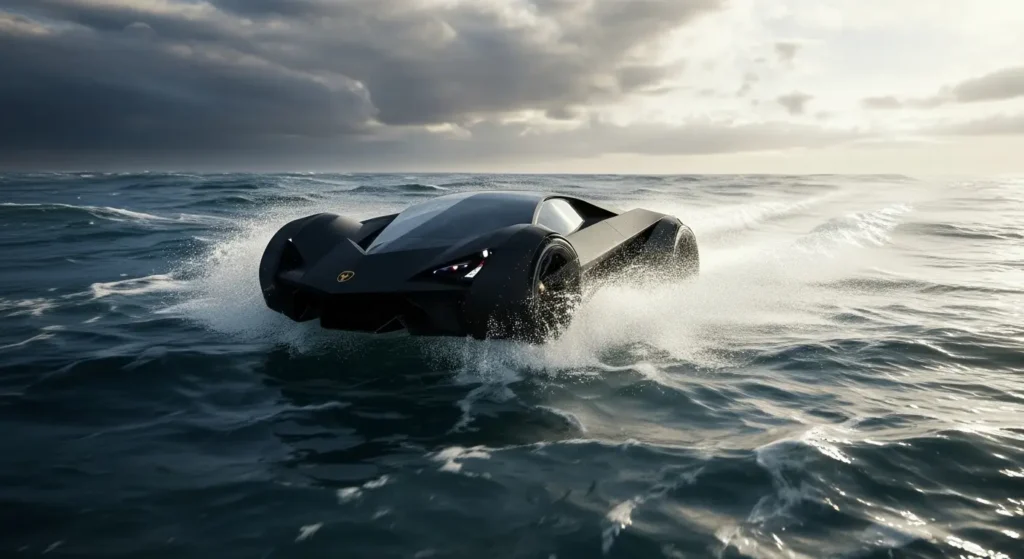
Prompt: A live-action, ultra-photorealistic cinematic scene set in the North Atlantic at dusk during a violent storm. A real racing car moves low and fast just above the ocean surface, straight toward the audience, skimming the waves using ground-effect airflow. Water sprays violently beneath it, leaving a heavy, churning wake. A powerful lightning strike hits directly on the car. The impact causes visible damage—carbon-fiber panels shatter and tear away, metal parts rip loose and fly backward, sparks and debris scattering into the rain. The vehicle looks momentarily broken and unstable. Immediately, the damaged structure reconfigures into an advanced futuristic form, new reinforced components locking into place. A controlled neon green technological glow appears from internal power systems, reflecting naturally on the wet body—clearly advanced tech, not fantasy. As the transformation completes, a massive, anatomically accurate great white shark erupts from the water from behind, mouth wide open, attempting to bite the car. At the last possible second, the vehicle releases a brutal rear hyper-blast thrust—intense fire and pressure blasting backward through rain and spray. The car surges forward at extreme speed, staying low above the water. The shark narrowly misses, snapping at empty air, then crashes back into the ocean and disappears beneath the surface as water explodes around it. Lighting is strictly natural: dark storm ambience, lightning flashes, heavy rain. Motion is raw and mechanical with real weight and inertia. Textures are wet, damaged, and gritty. No cartoon, no stylization, no smooth CGI motion, no AI artifacts. Everything obeys real-world physics and scale. High-tension, survival-driven adventure. Ultra-realistic, live-action cinematic quality, 4K.
Quick Comparison Table (Simplified & Practical)
| Tool | Link | Strengths | Free Usage | Limitations | Best For | Rating |
|---|---|---|---|---|---|---|
| Kling AI | Try Now | Ultra-realistic motion, strong control | Limited / Restricted | Not always accessible for free users | Benchmark quality | 7.0/10 |
| PixVerse | Try Now | Realistic motion, cinematic camera angles, strong prompt accuracy | 90 free credits for new users + 30 daily login credits | Some advanced features and models require a paid plan | Realistic cinematic quality | 9.0/10 |
| Grok Imagine | Try Now | Super-fast generation, clear visuals, excellent prompt following | No | No daily credit system | Speed & simplicity | 8.4/10 |
| HailuoAI | Try Now | Hyper realistic visuals, strong motion quality | 100 free credits on signup | No daily credit system | Hyper realistic videos | 8.2/10 |
| Gemini Veo 3.1 | Try Now | Cinematic motion, strong realism | Free for students and eligible Jio users in India | ~3 videos/day and 8-second generation limit | Film-like shots | 8.0/10 |
| Pika | Try Now | Good prompt adherence, decent motion quality | Limited free credits at signup | 12 credits for a 5-second video and moderate output quality | Testing short AI videos | 7.5/10 |
1. PixVerse
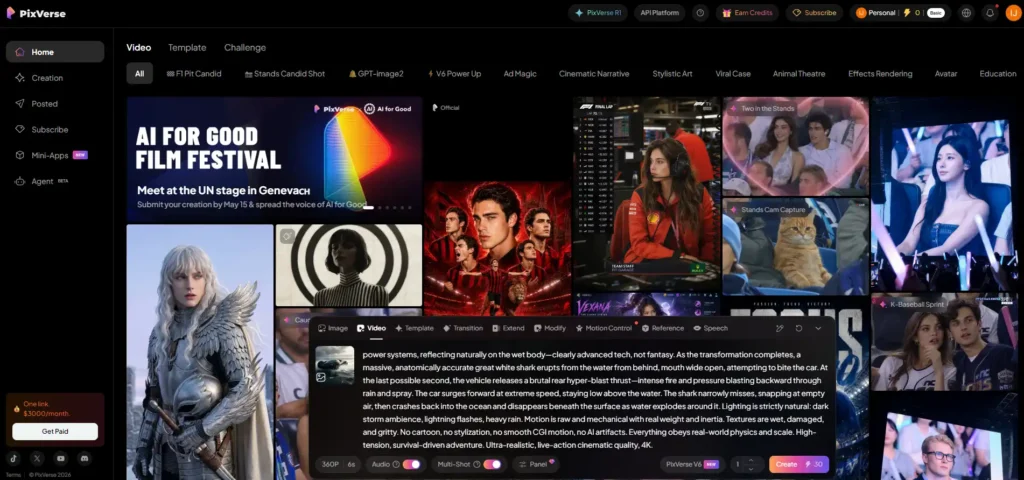
PixVerse is an AI image and video generation tool developed in China by the company AIsphere, which is headquartered in Beijing.
When new users sign up, PixVerse provides 90 free credits initially and free users can also get 30 credits daily through daily login rewards.
One good thing about PixVerse is that it supports almost every major type of AI video generation method. They also have their own video generation model, while additionally supporting some of the best external AI video models as well.
I tested their new PixVerse V6 mode and the generated output followed around 90% of my prompt instructions accurately. The videos also included impressive elements like sound effects, slow motion, fast motion, cinematic camera angles and realistic visuals. I’ll share the output so you can check it yourself.
This AI Video is Generated by Author using PixVerse
2. Grok Imagine
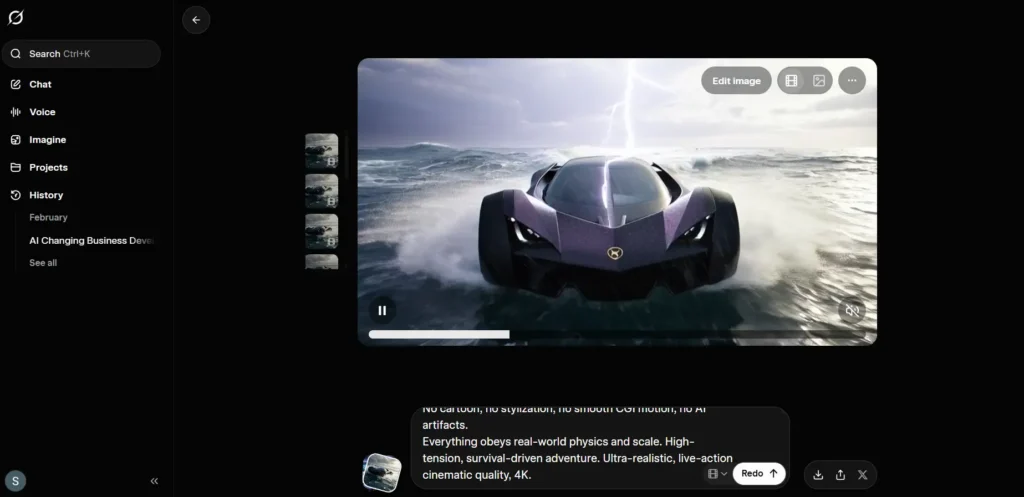
Grok Imagine is an AI tool that creates realistic images and videos from text prompts. It focuses on clear results, good detail and fast generation with very little setup.
You can create up to 20x more AI videos per day in supergrok plan, upscale them to HD quality and download them easily. For a detailed breakdown, check the full Grok AI image and animation review blog.
This AI Video is Generated by Author using Grok Imagine
Grok Adds a New Feature:
Recently, Grok added a new feature for video generation. Now you can extend a 10-second video upto 30 seconds and this feature is available only for paid users.
3. HailuoAI
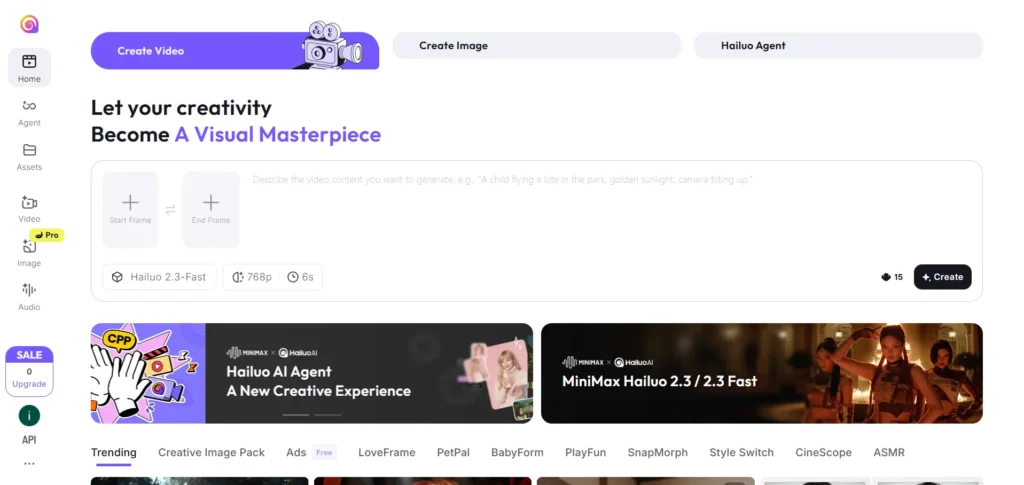
In HailuoAI, when you log in, you get 100 credits. To generate a video, it uses 15 credits for a 6-second video with 768p resolution. The video is ready in about one minute.
You can keep generating videos at the same time until your credits run out. I gave three video generation requests together and they loaded and generated one by one. In total, I was able to generate 6 videos for free. Out of those six, only one video came out well, which I have shown below. The remaining videos were just average.
This AI Video is Generated by Author using HailuoAI
4. Gemini (Veo3.1)
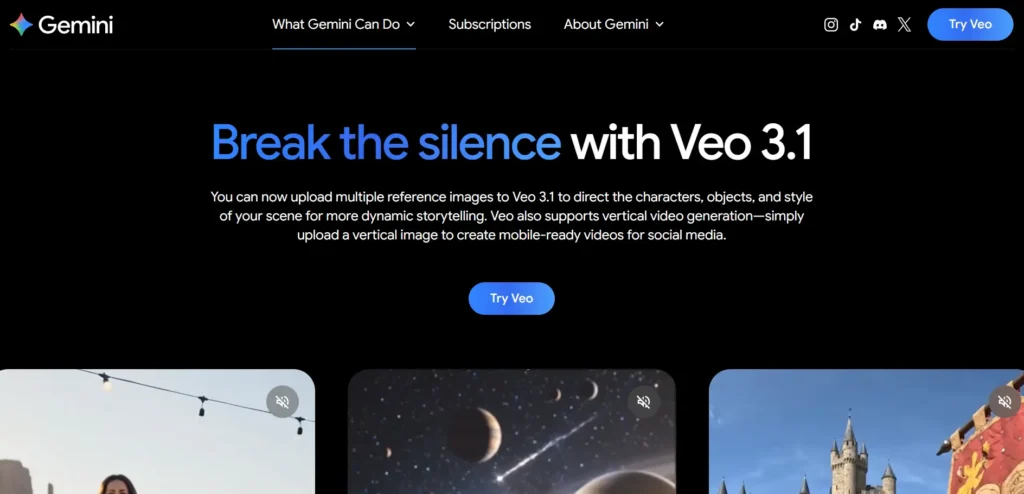
Gemini Veo 3.1 is Google’s latest AI video model built to create high-quality, realistic videos from simple text prompts. It understands motion, camera angles, and scenes better, so outputs feel more natural and cinematic. In short: faster, smarter video generation with cleaner visuals and stronger storytelling.
It create 8 sec video in high quality which is look more realistic and very natural but this is not allowed to generate videos for free user
Google Veo 3 and Gemini Pro are available free in India for eligible users, including students and select Jio users. Students get 12 months of free access through the Google AI Pro plan, while eligible Jio users receive up to 18 months free, allowing them to use advanced AI models and high-quality AI video generation tools. But allow only three video generation per day
Lets see the gemini (veo 3.1) output
This AI Video is Generated by Author using Google VEO 3.1
5. Pika
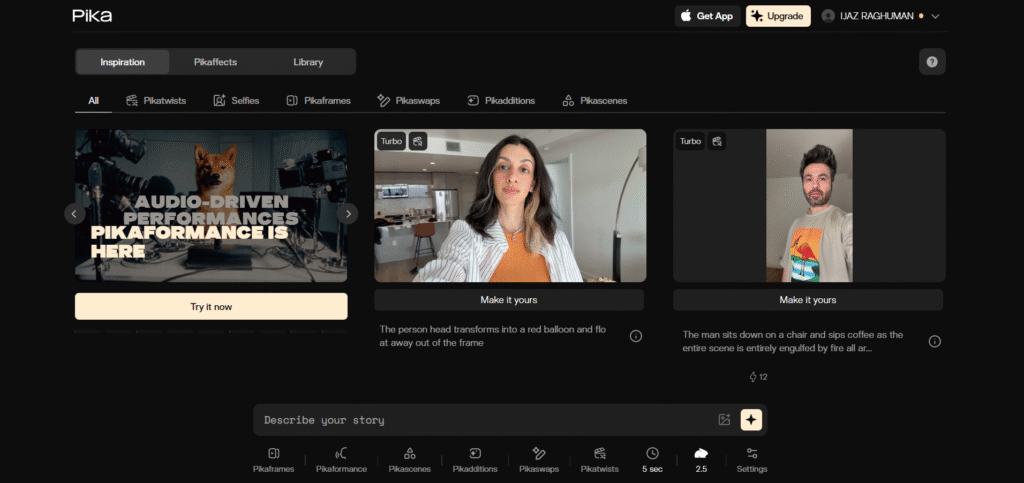
In Pika, a 5-second video costs 12 credits and it follows the prompt properly, but the output quality feels moderate rather than impressive and since the free plan only gives limited credits at signup, you can test it but not experiment much.
This AI Video is Generated by Author using Pika
Kling AI Alternatives Pricing Comparison Table (June 2026)
| Tool | Free Plan | Most Popular Plan | Starting Price (Monthly) | Monthly Credits / Usage | Best For |
|---|---|---|---|---|---|
| Kling AI | Free daily credits | Standard | $10 | 660 credits/month | Realistic AI videos |
| PixVerse | 90 free credits + daily credits | Standard | $10 | 1,200 credits/month | Best value for most creators |
| Grok Imagine | No free plan | SuperGrok | $30 | Includes image/video generation | Fast generation & simplicity |
| HailuoAI | Free credits on signup | Standard | $9.99 | 1,000 credits/month | Hyper-realistic videos |
| Gemini Veo 3.1 | Limited free access | Google AI Pro | $19.99 | Limited Veo generations | Cinematic filmmaking |
| Pika | Limited free credits | Pro | $28 | Higher generation limits | Quick social media videos |
FAQs
1. Is there any tool that truly beats Kling AI?
In some areas, yes. PixVerse delivers surprisingly realistic motion and cinematic video quality. During testing, its V6 model followed prompt instructions very accurately and produced outputs with smooth camera movement, sound effects, slow motion, fast motion and realistic visuals that can genuinely compete with Kling AI in certain use cases.
2. Which Kling alternative is best for free users?
PixVerse is one of the best free alternatives to Kling AI right now because it gives generous free credits compared to many other AI video tools. New users get 90 free credits after signing up and free users also receive 30 daily credits through daily login rewards. This makes it possible to generate multiple AI videos without paying immediately.
3. Why did many tools fail the test?
Because the prompt was extreme real physics, damage, transformation, rain, lightning and motion. Many tools can animate, but can’t maintain structure under stress.
4. Are these tools good enough for professional work?
Some are good for concepts, storyboards and previews. For final cinematic output, pixverse quality is best.
5. What matters more (prompt or model)?
The model. Since the same prompt was used everywhere, differences came purely from how well each AI understands motion and physics.
Note: The details in this blog may change over time because AI tools keep improving and adding new features. Whenever there are important updates, we will update this blog as well. You can bookmark this page for future reference.
Conclusion
- After testing these tools side by side, one thing became very clear: Kling AI did not become popular by accident. It still handles motion, realism and physical consistency better than most AI video generators, especially in complex scenes. When videos become fast, chaotic or action-heavy, many tools start breaking apart, but Kling usually stays stable.
- At the same time, PixVerse was one of the biggest surprises during testing. Its new V6 model followed prompt instructions very accurately and produced cinematic outputs with realistic motion, sound effects, camera angles, slow motion and fast-motion effects. In some situations, PixVerse genuinely felt competitive with Kling AI, especially considering the free credits and accessibility it offers.
- When Kling is not available, other alternatives can still work, but each comes with limitations. In our tests, Grok followed prompts more accurately than Veo, especially during complicated action sequences. Veo delivered a strong cinematic style, but it sometimes simplified or ignored important instructions. Whisk produced decent visual quality, but its prompt accuracy was inconsistent.
- The biggest takeaway from all these tests is simple: prompt clarity matters a lot. Even powerful AI models can fail if they do not properly understand or follow the instructions. The tools that respected the prompt consistently produced the best results.
- In short, choose the right tool for your use case, understand its limitations and spend time writing better prompts.
0 Comments